
Nashville Warrant Checks
Nashville keeps local records at Village Hall, but its court cases sit at the county level. A warrant check here touches both offices.
- Call Nashville Village Hall at 517-852-9544 for a local ordinance or citation document.
- Search the case in MiCOURT under 56-B District Court.
- Call 56-B at 269-945-1404 and ask whether a warrant is active on the case.
- Call the Circuit Judge's Office at 269-945-1286 or the County Clerk at 269-945-1285 after a felony bindover.
- Call the sheriff at 269-948-4801 or 269-948-4805 for holding and service questions.
Nashville's Document Center and Warrants
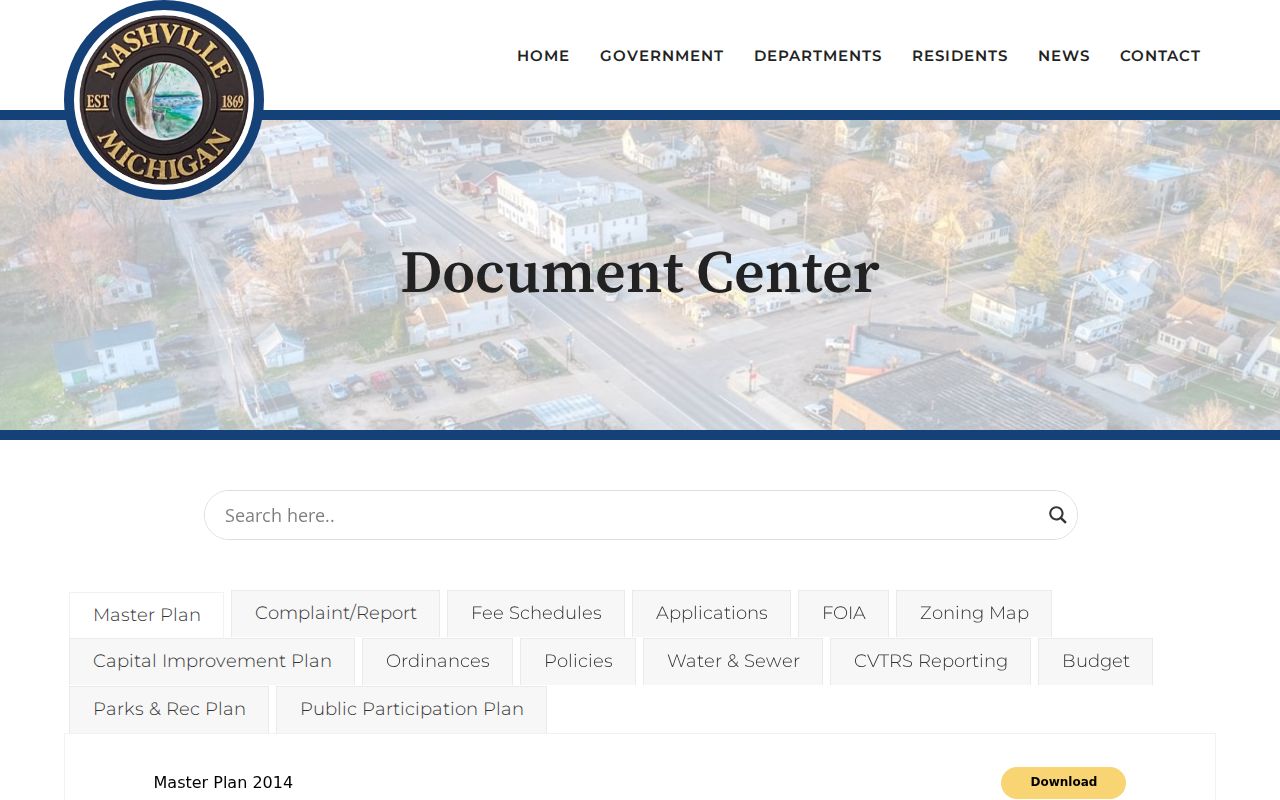
The Nashville document center posts the village ordinance trail, including civil-infraction material plus parking, sidewalk, firearms, and motor-vehicle rules. Those pages explain what a local notice means. They show no person-level warrant record. Read the rule at the village, then ask the court whether a case or active warrant exists.
Policing and Courts in Nashville
Nashville runs a village office, not its own criminal court. Village Hall sits at 203 N. Main St., and the number is 517-852-9544. The posted office hours and council calendar are administrative only. Court matters go to 56-B District Court in Hastings, and felony questions reach the circuit court after bindover. No local warrant portal exists.
Civil-Infraction Ordinance Versus Court Warrant
An ordinance and a warrant are different things. The ordinance is a local Nashville rule, while a warrant is a court order that follows a missed obligation in a case. One comes from the village, the other from a judge.
| Item | What It Is | Where It Lives |
|---|---|---|
| Village ordinance | A local rule passed by the village | The document center |
| Citation | A notice that a rule was violated | The citing officer or village |
| Court case | The judicial matter opened after the citation | 56-B District Court |
| Warrant | A court order after a missed date or compliance failure | The issuing court |
Warrants in Nashville: The Main Types
A Nashville matter that reaches court draws the same warrant types as other Barry County cases. The village has none of its own.
| Warrant Type | How It Arises | Who Issues It |
|---|---|---|
| Traffic warrant | A missed date or an unpaid citation | 56-B District Court |
| Ordinance warrant | An unresolved village ordinance matter | 56-B District Court |
| Bench warrant | A failure to appear in an existing case | The judge in that case |
| Arrest warrant | A criminal complaint and probable cause | Magistrate, then Circuit after bindover |
If a Nashville Warrant Followed a Citation
A missed Nashville court date can turn a routine citation into a bench warrant, and the village document never shows that change. The court file does. Call 56-B at 269-945-1404. Give the clerk the citation number, and ask whether a warrant is active and what the court requires. Do that before paying anything, because a payment does not always recall an FTA warrant. Note: A missed date is a court event, so the court is the office that can describe it accurately.
Nashville Warrant Records: What They Show
A Nashville case that reaches 56-B produces a docket with these fields.
| Case number | The district court identifier, for example 2024-TR-02984 |
|---|---|
| Originating place | The Village of Nashville or its citing officer |
| Violation or charge | The ordinance, civil infraction, or criminal charge |
| Issuing court | 56-B District Court for village matters |
| Missed obligation | Whether the file shows a failure to appear |
| Status | Open, paid, recalled, or warrant, as the clerk reads it |
Why D56B Holds Nashville Warrants
Nashville has no local court, so the D56B route is the only public case search for a village matter. D56B covers traffic, civil infractions, misdemeanors, and felony proceedings before bindover. Use the village for the underlying document. Use D56B for the judicial record. If the case was bound over, switch to the C05 circuit route and the County Clerk.
Nashville Warrant Status Is Not Posted
Nashville's homepage carries current notices and a council calendar, which show an active local government. They are not a warrant feed. Case status never appears there. A notice about an ordinance change, a road project, or a meeting is not a records source. The court remains the place to confirm a Nashville warrant.
Nashville Warrants and Barry County
Once a Nashville matter becomes a court case, the county system owns it. That split explains why the village and the court hold different pieces, and why a felony can end up in circuit court after bindover. The county-level steps sit on the Barry County warrant records page. Sheriff and jail numbers cover holding and custody. The court answers legal status. Keep those roles separate when you call.
The Document Trail: Notice to Court
A Nashville matter usually moves through four stages, and each leaves a different record. It starts as a village notice or ordinance, then a citing officer issues a citation. A case opens at 56-B. A missed date can produce a warrant, and knowing the stage tells you which office to call. Note: In Nashville the document trail is the map, and the court case is the destination.
Accessing Nashville Warrant Records
Nashville court records follow Michigan court rule, and village documents follow the Michigan FOIA.
Key Rules:
MCR 8.119 allows inspection of public court records unless a rule or order restricts them.
MCL 712A.28 restricts juvenile records, which are not part of a routine search.
MCL 15.235 sets the written FOIA route for village records.